How to choose the right Amalfi Coast beach
Searching for the best beaches on the Amalfi Coast can be slightly misleading because the coastline does not work like a traditional beach destination. You will not find kilometre after kilometre of soft sand. Instead, the coast is a collection of small coves, pebble beaches, bathing platforms and sheltered stretches of shoreline squeezed between steep cliffs and colourful villages.
That is actually part of the appeal. The best beach for you depends less on a universal ranking and more on what you want from the day: a famous view, easy swimming, a quiet cove, a family-friendly promenade, a beach club, or somewhere you can reach without climbing hundreds of steps.
Iconic · Central Positano
Spiaggia Grande
The classic Amalfi Coast beach. Come for the famous Positano backdrop, restaurants and beach clubs directly beside the water. It is busy, but the setting is difficult to beat.
Quieter · Walk from Positano
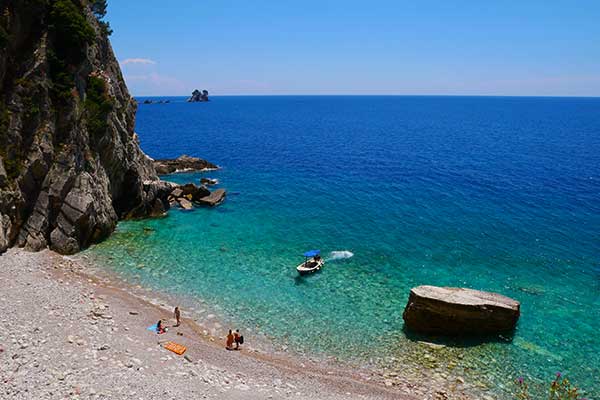
Fornillo Beach
A more relaxed alternative to Spiaggia Grande. You are still surrounded by Positano's cliffs, but the atmosphere is calmer and the beach feels less like the centre of the spectacle.
Dramatic · Small cove
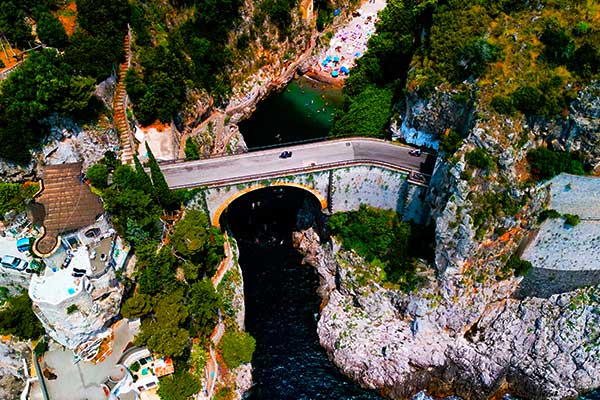
Fiordo di Furore
One of the most photographed corners of the coast. The tiny beach sits below towering rock walls, making the journey feel almost cinematic. Go for the landscape rather than space.
Space · Families · Easy access
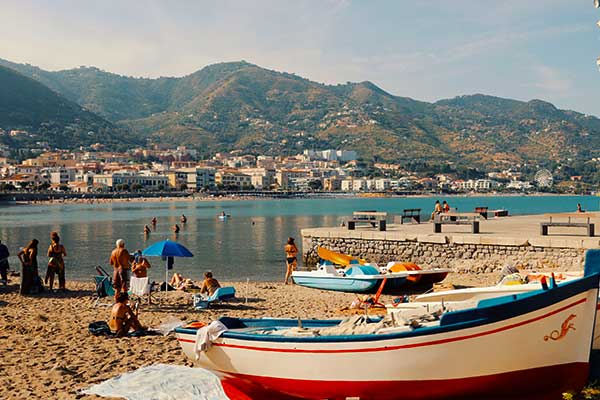
Maiori
If your idea of a beach day involves more space and fewer stairs, Maiori changes the equation. It has one of the longest beaches on the Amalfi Coast and a broad waterfront promenade.
Spiaggia Grande, Positano
If you have seen one photograph of an Amalfi Coast beach, there is a good chance it was Spiaggia Grande. This is Positano's main beach, sitting directly beneath the famous cascade of pastel buildings and steep green cliffs. It is the beach most visitors picture when they imagine a summer day in Positano.
The beach itself is made largely of dark pebbles rather than soft sand. The water can look remarkably blue on a clear day, and the view back towards Positano is the main attraction. From the shoreline you can see the town climbing vertically up the hillside, with boats moving in and out of the bay.
There is a public section as well as private beach clubs where you can rent sunbeds and umbrellas. Prices vary substantially depending on the operator, date and position, with front-row spaces generally costing more. In high season, booking ahead can make sense if you specifically want a private lido rather than simply arriving and finding a place to sit.
What nobody tells you about Positano
The beach is beautiful, but it is not necessarily the most relaxing beach day on the coast. Positano is one of the busiest destinations in the region, and the shoreline can feel crowded during July and August. If you want the iconic view but prefer a calmer atmosphere, consider spending part of the day at Fornillo instead.
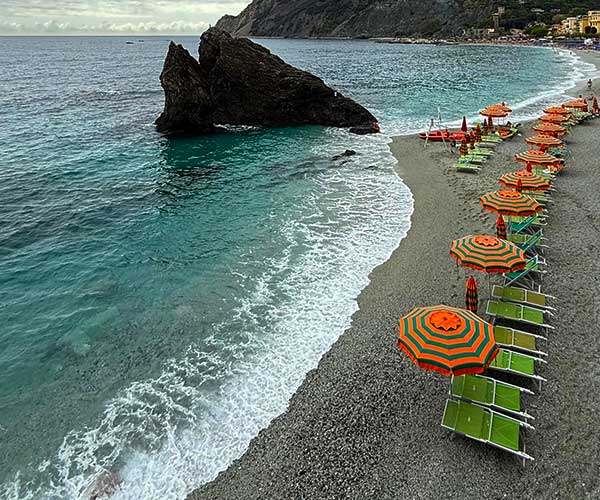
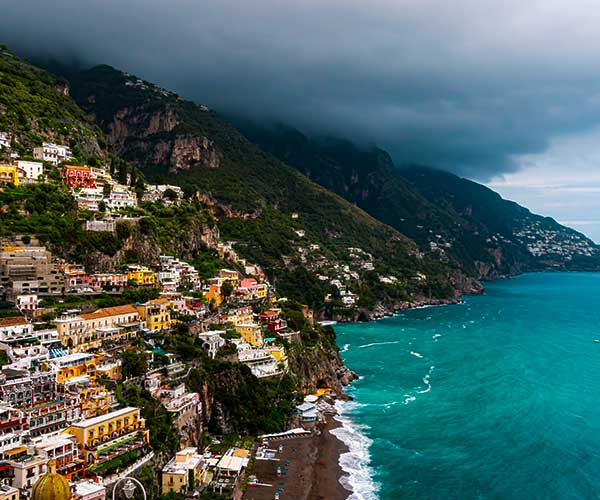
Spiaggia Grande is the postcard beach of Positano — spectacular, central and usually busy in summer.
How to get to Spiaggia Grande
The beach is directly below the centre of Positano and is easy to reach on foot once you are in town. The challenge is getting around Positano itself: the settlement is built vertically into the cliffs, so even short distances can involve stairs. If you arrive by bus, taxi or boat, allow extra time for walking between the beach, restaurants and accommodation.
Spiaggia Grande — Key Facts
- LocationCentral Positano
- Beach surfaceMostly pebbles
- Public sectionYes
- Beach clubsSeveral
- Best forIconic views · first-time visitors
- Main drawbackCrowds and higher prices in summer
Fornillo Beach, Positano
Fornillo is the beach I would look at if you want to stay in Positano but the main beach feels too hectic. It is still close enough to walk from the centre, yet the atmosphere is noticeably more relaxed. The coastline around it is framed by cliffs, small restaurants and traditional buildings, and the view back towards the coast is beautiful.
There are both public and private sections, and the beach is mostly pebbly. Bring water shoes if you dislike walking over stones. The sea is generally inviting for swimming when conditions are calm, but as anywhere along this coast, water conditions can change quickly and boats operate close to the shoreline.
One thing to consider is access. Getting from the centre of Positano to Fornillo means walking along a coastal path and descending stairs. It is not an impossible walk, but it is not suitable for anyone looking for completely step-free access either.
Good to Know
Fornillo is one of the beaches worth considering if you want the Positano experience without spending the entire day on Spiaggia Grande. Arriving earlier gives you more choice in the public section and a better chance of enjoying the cove before the afternoon crowds build.
Fiordo di Furore
Fiordo di Furore is one of the most dramatic beaches on the Amalfi Coast. A tiny strip of pebbles sits at the bottom of a narrow gorge, enclosed by steep rock walls and crossed by the famous bridge high above the water.
This is not a beach to choose because you want lots of space, facilities or a long afternoon on a sunbed. The appeal is the setting. The combination of rock, sea, the old fishing settlement and the road passing above creates one of the most recognisable landscapes on the entire coast.
Access is more complicated than at Maiori or Minori, and the beach is small. Conditions can also vary with waves and sea state. If you plan to swim, check local conditions rather than assuming the water will be calm simply because photographs show a perfectly blue cove.
Fiordo di Furore — Key Facts
- LocationBetween Amalfi and Praiano
- Beach surfaceSmall pebble shore
- Best forScenery · photography · short visit
- SpaceVery limited
- SwimmingOnly when conditions are suitable
- AccessStairs and coastal access
Marina di Praia
Marina di Praia is a small fishing village and beach tucked between high cliffs near Praiano. It is one of those places where the geography of the Amalfi Coast becomes obvious: there is barely enough flat land for the beach, restaurants and road, so everything is compressed into a narrow strip between rock and sea.
The beach is pebbly and backed by restaurants and beach clubs. Its position makes it particularly atmospheric later in the day, when the cliffs begin to shade parts of the shoreline. It is also a useful base for boat trips and exploring the coast from the water.
Because the beach is relatively small, the experience changes considerably depending on when you visit. Early morning is usually much more peaceful than the middle of a summer afternoon. If you are travelling without a car, check the local bus timetable carefully rather than assuming that every service will run exactly when you need it.
Atrani Beach
Atrani is one of the smallest municipalities on the Amalfi Coast, and its beach has a completely different atmosphere from the glamorous shoreline of Positano. The beach sits directly beside the compact village, with the church and houses rising behind it.
This is a particularly interesting choice if you want to combine a beach day with a more local-feeling village. You can swim, have lunch nearby and explore Atrani on foot without needing to organise a complicated excursion.
The beach is largely pebbly, and there are private bathing areas as well as public space. Because Atrani is connected directly to Amalfi, it is also practical for travellers staying in either town. Walking between Amalfi and Atrani is possible, although the route involves roads and pedestrian areas rather than a simple uninterrupted beach promenade.
Maiori and Minori: the beaches for easier beach days
If your mental image of an Amalfi Coast beach is a tiny cove reached by 200 stairs, Maiori is the place that breaks the stereotype. The town has one of the longest stretches of beach in the area, with a broad waterfront and easier access than many of the cliffside beaches further west.
That makes Maiori particularly practical for families, travellers who do not want steep staircases and anyone who actually wants to spend several hours swimming rather than simply photographing the coastline.
Minori, immediately along the coast, is smaller but also offers a more straightforward beach experience. It is known for its waterfront, restaurants and historical character, and it can work well as an alternative base to the more expensive and crowded towns further west.
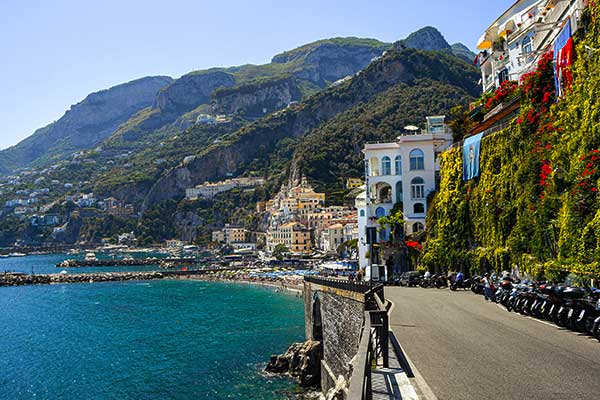
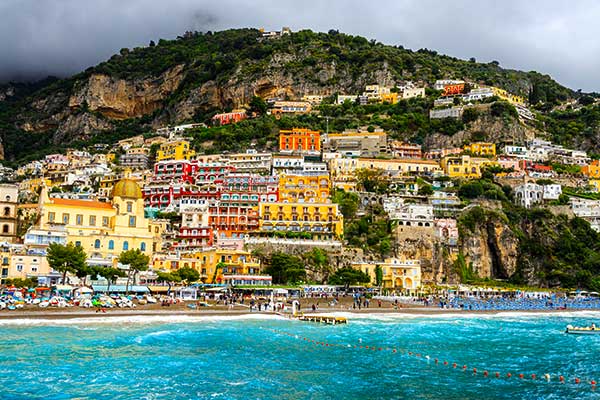
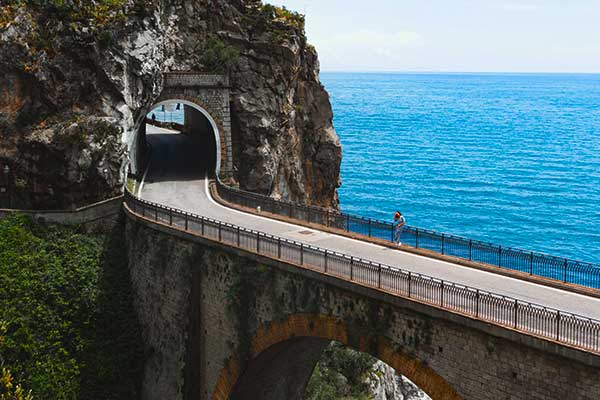
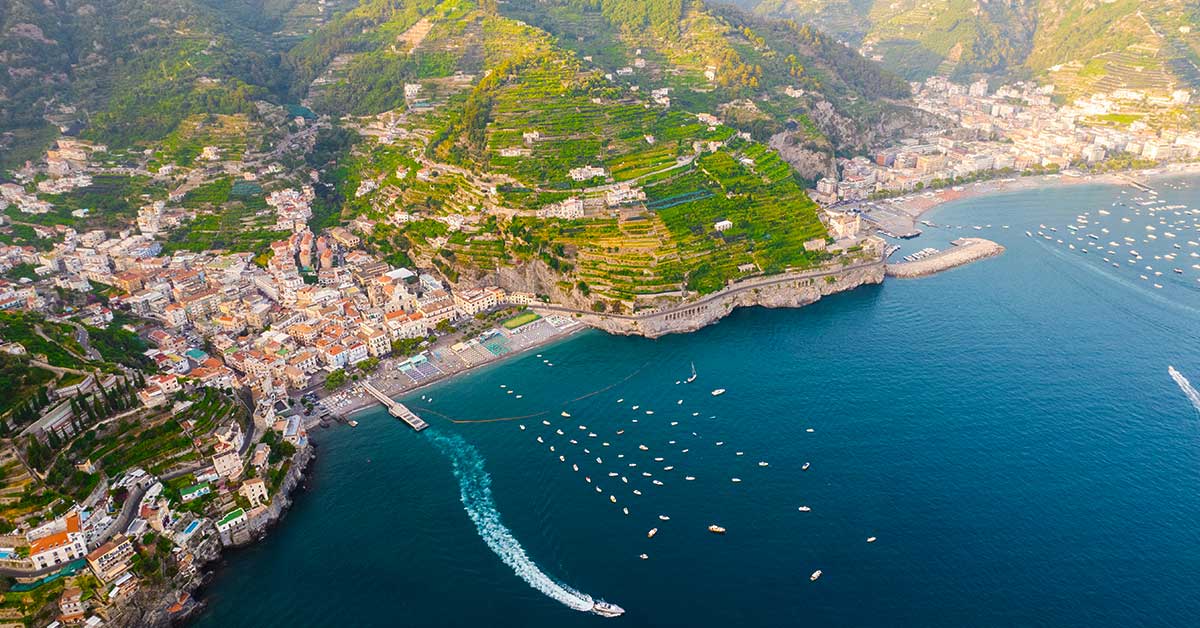
The coastline changes dramatically from one town to the next — from broad beaches in Maiori to tiny coves beneath cliffs.
Why Maiori works well for families
Maiori has more usable waterfront space than many of the famous beaches around Positano and Praiano. There is also a promenade, shops and restaurants nearby, making it easier to organise a full day without repeatedly climbing steep stairs.
That does not mean it is completely flat or effortless — this is still the Amalfi Coast — but compared with many smaller coves, the logistics are much simpler.
Maiori & Minori — Key Facts
- Beach typeLonger pebble shoreline
- Best forFamilies · space · easier access
- Public areasYes
- Restaurants nearbyYes
- AtmosphereMore practical than glamorous
- Good alternative toBusy Positano beach days
Duoglio, Santa Croce, Gavitella, Arienzo and Laurito
Some of the most interesting beaches on the Amalfi Coast are not the ones you see first when searching for Positano. They are smaller, more difficult to reach and sometimes accessible most easily by boat.
Duoglio Beach
Clear water · Secluded feeling
Located close to Amalfi, Duoglio is reached by a long staircase from the road or by boat. The effort is part of the experience. The water can be beautifully clear, and the smaller scale makes it feel removed from the main town.
Best for: swimming, clear water and travellers who do not mind stairs
Santa Croce
Boat access · Hidden cove
Santa Croce is a small coastal area near Amalfi that is particularly appealing when approached from the sea. Several restaurants and beach facilities are built into the cliffs, making this a memorable stop on a boat day.
Best for: boat trips, lunch by the sea and escaping the main beaches
Gavitella
Sunset · Praiano · Views
Gavitella is famous for its west-facing position and late-day light. The beach is small and reached by a significant number of steps, but the views towards Positano, Li Galli and the sea make the descent worthwhile for many visitors.
Best for: sunset, couples and dramatic coastal views
Arienzo Beach
Arienzo is one of the recognisable beaches between Positano and Praiano, known for its bright water and long staircase from the coastal road. Because of its position, it can receive strong sunshine and is often associated with private beach facilities. The key thing to remember is the access: if you do not enjoy stairs, this is not the easiest beach on the coast.
Laurito Beach
Laurito is a tiny cove close to Positano, best known for its secluded atmosphere and restaurants that can be reached by water or through a steep path. It is a good example of why boat transport can completely change the Amalfi Coast experience: a beach that feels difficult from land can become surprisingly simple when approached from the sea.
The Boat Trick
If your priority is discovering smaller beaches rather than spending the entire day climbing stairs, consider a small private or shared boat trip. Several coves and beach restaurants are much easier to reach from the water than from the road. Just remember that sea conditions and access can change, so always confirm the day's itinerary with the operator.
Full comparison: Amalfi Coast beaches at a glance
| Beach | Location | Access | Best for | Watch out for |
|---|---|---|---|---|
| Spiaggia Grande | Positano | Easy once in town | Iconic scenery, first visit | Crowds, prices |
| Fornillo | Positano | Walk + stairs | Swimming, quieter Positano | Stairs, limited public space |
| Fiordo di Furore | Furore | Stairs / road access | Dramatic scenery, photography | Very small, sea conditions |
| Marina di Praia | Praiano | Road / stairs | Swimming, restaurants | Small beach, afternoon shade |
| Atrani | Atrani | Easy from village | Swimming, village atmosphere | Limited space in summer |
| Maiori | Maiori | Easy | Families, space, longer beach | Less secluded |
| Minori | Minori | Easy | Families, food, practical beach day | Can get busy |
| Duoglio | Amalfi | Long staircase / boat | Clear water, quieter coves | Many stairs |
| Santa Croce | Amalfi | Best by boat | Boat days, secluded feel | Limited land access |
| Gavitella | Praiano | Many stairs | Sunset, views | Long climb back |
| Arienzo | Positano | Long staircase / boat | Swimming, beach clubs | Stairs, sun exposure |
| Laurito | Positano | Boat / steep path | Hidden coves, lunch by sea | Very small |
Practical information: free beaches, swimming, beach clubs and when to go
Are there free beaches on the Amalfi Coast?
Yes, although the amount of free beach varies dramatically from one town to another. Several beaches combine a public section with private bathing establishments where you can rent sunbeds and umbrellas.
Maiori, Minori and Atrani are worth considering if having access to a larger public section matters to you. In Positano, public space exists but can be limited relative to demand, particularly during the busiest summer weeks.
The best strategy for a free beach day is simple: arrive early. You are competing for a relatively small amount of shoreline, especially in the smaller coves.
Best Amalfi Coast beaches for swimming
The Amalfi Coast has beautiful swimming water, but the coastline is not a controlled swimming pool. Conditions depend on wind, waves, currents and boat traffic. For a relaxed swimming day, look at beaches with a clearly defined shoreline and local bathing facilities rather than isolated cliff coves.
Fornillo, Marina di Praia, Atrani, Maiori and Minori are practical options. Smaller coves such as Duoglio can also be rewarding when conditions are good. Always respect local warnings and avoid entering the water when conditions look unsafe.
Amalfi Coast beach clubs: what to expect
Beach clubs, or lidi, are a major part of the Italian beach experience. Instead of simply paying for entry, you normally rent a sunbed and umbrella for the day. Prices vary according to the beach, season, position and operator.
In the most famous destinations, especially Positano, a front-row sunbed can become an expensive part of your travel budget. Smaller towns and less famous beaches can offer a more relaxed experience at a lower price.
If you are travelling in July or August, check prices and reservation policies before your beach day rather than assuming every beach club operates on a walk-in basis.
When is the best time to visit the Amalfi Coast beaches?
For a balance between warm weather, swimming conditions and manageable crowds, late spring and early autumn are particularly attractive. May, June, September and early October can offer a different experience from the intense peak of July and August.
July and August are the classic summer months, but they also bring the highest demand. Beaches, ferries, buses and restaurants can all become significantly busier. If you want photographs without crowds and a more relaxed beach experience, arriving early in the morning is often more important than choosing a particular beach.
What should you bring?
Pack for the geography, not just the weather. Water shoes are one of the most useful things you can bring because many beaches are pebbly. Bring sunscreen, water, a towel, sunglasses and some cash for smaller establishments.
If you are visiting a beach that involves stairs, keep your bag light. Carrying a large beach bag down a long staircase is considerably less glamorous than it sounds.
The best beach on the Amalfi Coast is rarely the one with the most famous name. It is the one that fits the kind of day you actually want to have. Travel notes, September 2026