How to choose where to go in Patagonia
One of the biggest mistakes when planning Patagonia is treating it like a compact region. It isn't. The distances are enormous, weather can change within minutes, and crossing between Argentina and Chile adds border logistics to an already large itinerary.
The right destination depends heavily on what you want from the trip. If your priority is dramatic mountain scenery and multi-day trekking, Torres del Paine deserves serious time. If you want spectacular day hikes without sleeping in a tent, El Chaltén is easier. If glaciers are the reason you came, base yourself around El Calafate. If the journey itself matters as much as the destination, the Carretera Austral is the route to build around.
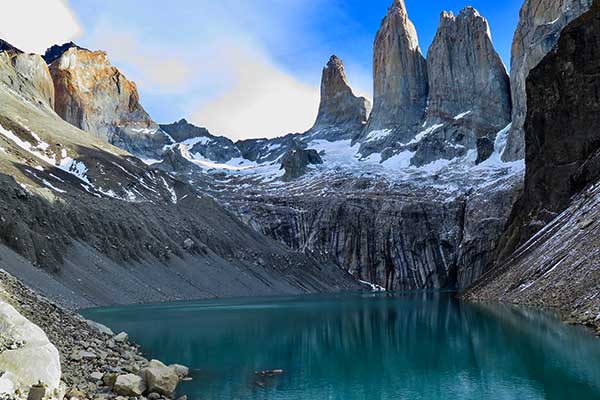
2–4 days · Chile
Torres del Paine
The classic Patagonia experience: granite towers, glacial lakes, wildlife and some of South America's most famous multi-day treks.
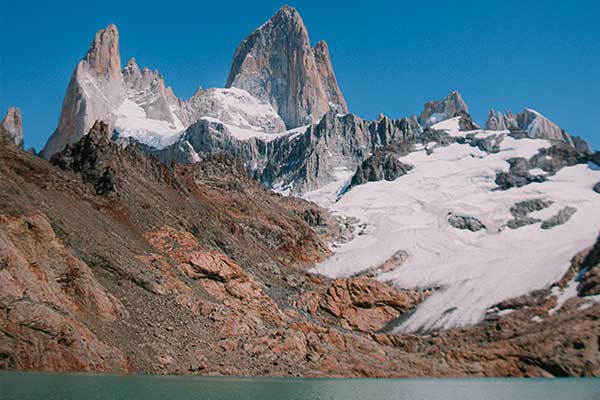
3–4 days · Argentina
El Chaltén
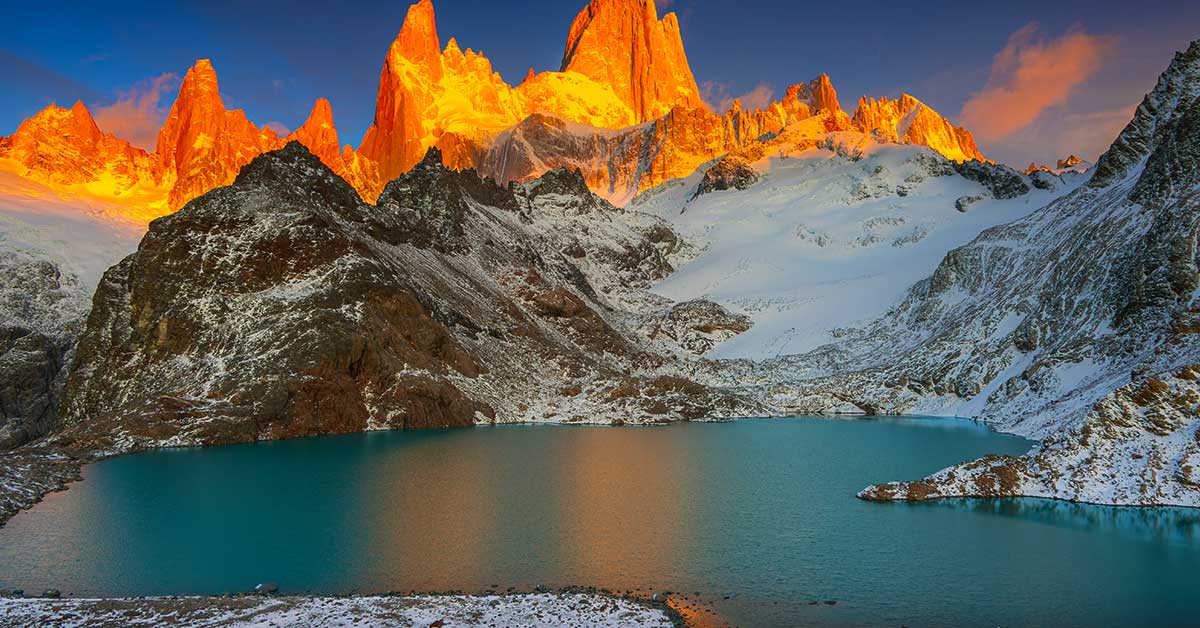
A tiny hiking town beneath Fitz Roy. Trails start close to town, making it one of Patagonia's easiest places for independent day hiking.
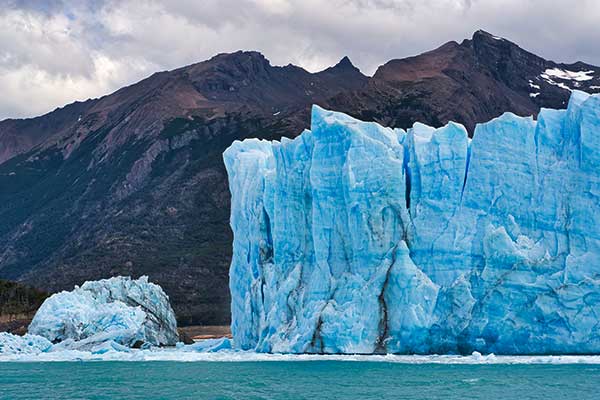
2–3 days · Argentina
El Calafate
The gateway to Perito Moreno Glacier and one of the easiest places to experience an enormous Patagonian glacier without a multi-day trek.
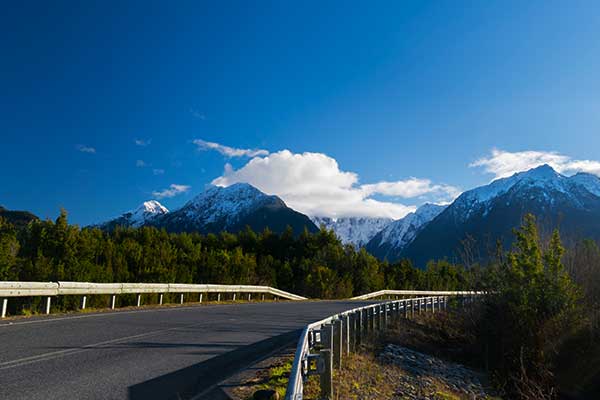
5–10+ days · Chile
Carretera Austral
The choice for travellers who want the journey itself to be the adventure: gravel roads, forests, glaciers, lakes and remote villages.
Torres del Paine — Patagonia's iconic landscapes
If you have seen photographs of Patagonia, there is a good chance you've already seen Torres del Paine. The national park in southern Chile is defined by enormous granite towers, turquoise lakes, glaciers, valleys and windswept grasslands populated by guanacos and other wildlife.
The park is famous for the W Trek and the longer O Circuit, but you do not need to commit to a multi-day trek to experience it. Day excursions from Puerto Natales can reach several of the park's most spectacular viewpoints, although the longer you stay, the more the landscape opens up.
2026 Planning Note
Torres del Paine requires more advance planning than many other Patagonia destinations. Accommodation inside or around the park has limited capacity, and popular trekking routes can fill during the summer season. If you want to hike for several days, organise accommodation and transfers before arriving rather than assuming you can arrange everything locally.
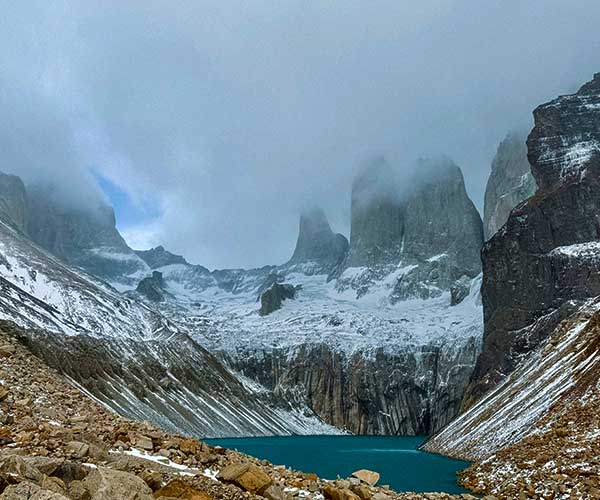
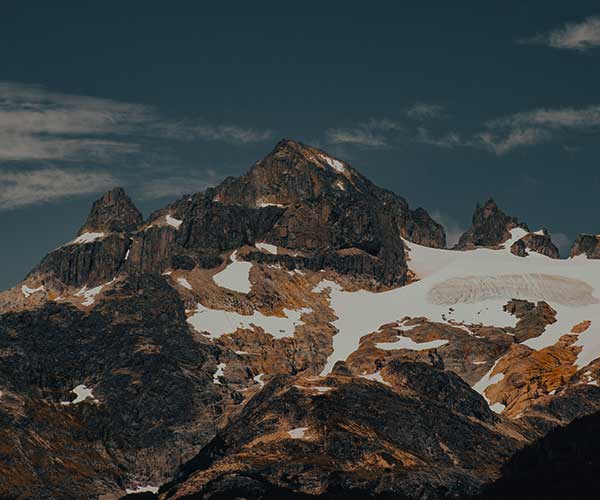
Torres del Paine is at its most impressive when you slow down: the park is a landscape to experience over several days rather than rush through in a single afternoon.
What to do in Torres del Paine
The classic options are the Base Torres hike, the W Trek and the O Circuit. The park also offers shorter walks, viewpoints, boat excursions and opportunities for wildlife watching. The Grey Glacier area adds another completely different landscape of ice and water.
Torres del Paine — Key Facts
- CountryChile
- Main gatewayPuerto Natales
- Ideal stay2–4 nights minimum
- Best forTrekking · scenery · wildlife
- Famous routesW Trek · O Circuit · Base Torres
- Best seasonOctober–April
El Chaltén — Fitz Roy and world-class hiking
El Chaltén feels completely different from Torres del Paine. Instead of a huge park infrastructure, you get a small mountain town surrounded by trails. Several of the most famous hikes begin directly from or very close to the town, making it exceptionally convenient for independent hikers.
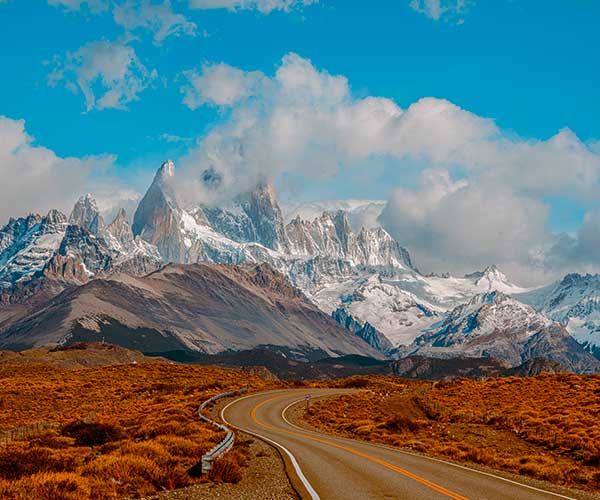
The star is Mount Fitz Roy, whose jagged granite silhouette appears above the valley on clear days. The Laguna de los Tres hike is the famous challenge, but Laguna Capri, Laguna Torre and shorter viewpoints mean you don't need to spend every day walking for eight or ten hours.
Good to Know
Weather matters enormously in El Chaltén. Fitz Roy can disappear behind clouds for hours or even days. Build in an extra day if the mountain is a priority rather than planning your entire itinerary around one specific morning.
Why El Chaltén is one of the best places to visit in Patagonia
For travellers who want serious scenery without necessarily booking a guided expedition, El Chaltén is particularly appealing. The town is compact, hiking is the main reason everyone is there, and you can combine demanding days with shorter walks or simply wait for the weather to clear.
The route from El Calafate takes several hours by road, which makes it easy to combine the two destinations. Allow at least three nights if hiking is a priority.
El Calafate and Perito Moreno Glacier
El Calafate is the main base for exploring Los Glaciares National Park and the Perito Moreno Glacier. Unlike many remote Patagonian attractions, Perito Moreno can be experienced without a demanding trek: extensive viewing platforms bring you surprisingly close to the glacier face.
The glacier is one of Patagonia's defining sights. Huge walls of blue-white ice rise from Lago Argentino, and the occasional thunderous sound of ice breaking and falling into the water is one of those travel moments that photographs cannot really reproduce.
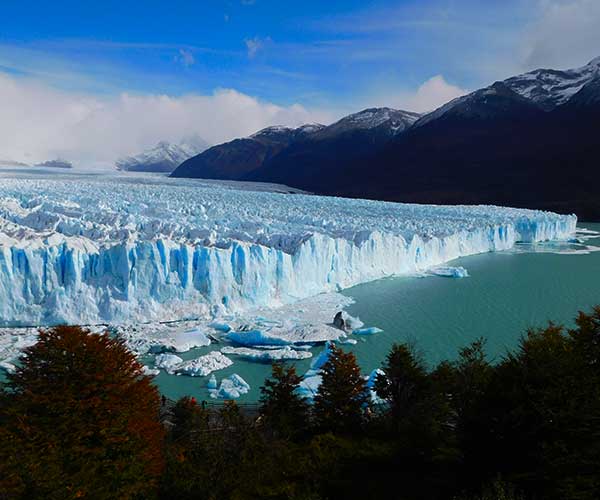
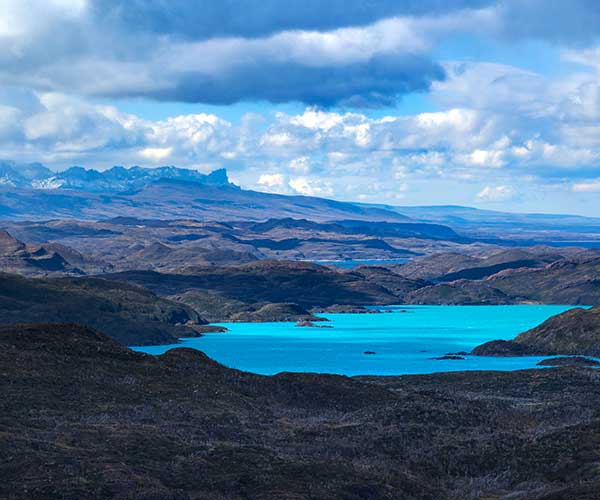
Perito Moreno is one of Patagonia's most accessible major landscapes, while the surrounding Los Glaciares region rewards travellers who stay longer.
Beyond Perito Moreno
Don't treat El Calafate as a one-attraction stop. Boat trips across Lago Argentino can take you towards other glaciers and remote areas of the national park, while Estancias around the region offer a glimpse into the traditional rural culture of southern Argentina.
El Calafate — Key Facts
- CountryArgentina
- Ideal stay2–3 nights
- Main attractionPerito Moreno Glacier
- Best forGlaciers · boat trips · easy access
- Combine withEl Chaltén · Torres del Paine
- AirportEl Calafate International Airport
Puerto Natales — gateway to Torres del Paine
Puerto Natales is often treated simply as the place where travellers sleep before heading into Torres del Paine. That's a mistake. The waterfront town sits between mountains, fjords and enormous skies and makes a pleasant base before or after a trek.
It is also the practical starting point for many Torres del Paine itineraries, with buses, transfers, gear rental and trekking services concentrated around town.
How long should you stay?
One night works if you're using Puerto Natales purely as a gateway. Two nights gives you time to organise equipment, recover from travel and explore the town and nearby landscapes. If you are not camping or trekking, Puerto Natales can also work as a comfortable base for day trips into the park.
Carretera Austral — the ultimate Patagonia road trip
The Carretera Austral is not a single attraction. It is a spectacular route through Chilean Patagonia, running south from Puerto Montt through remote landscapes of forests, fjords, glaciers, rivers and mountains.
This is where Patagonia becomes less about famous viewpoints and more about the road itself. Driving distances can be slow because sections are gravel, services are limited and weather can change quickly. But the reward is a much more remote experience than the classic El Calafate–Torres del Paine circuit.
Puerto Río Tranquilo and the Marble Caves
Puerto Río Tranquilo is one of the most worthwhile stops along the central Carretera Austral. The small town sits beside the enormous General Carrera Lake and is the gateway to the Marble Caves, natural formations sculpted into the shoreline by water over thousands of years. The area also provides access to the Exploradores Glacier and some of the route's most spectacular scenery. :contentReference[oaicite:1]{index=1}
Road Trip Tip
Don't underestimate driving times on the Carretera Austral. Gravel sections, weather and photo stops can turn a supposedly short journey into a full day. Fuel up whenever you have the opportunity and avoid planning every night around an exact arrival time.
Cerro Castillo
Further north, Cerro Castillo offers another spectacular mountain landscape and hiking opportunity. The area is less internationally famous than Torres del Paine, which is precisely part of its appeal for travellers looking for a quieter side of Patagonia.
Ushuaia and Tierra del Fuego
At the southern end of Argentina lies Ushuaia, often described as the world's southernmost city. Whether or not you care about the title, its setting is extraordinary: mountains descend directly towards the Beagle Channel, and Tierra del Fuego National Park begins just outside the city.
Ushuaia makes sense as a separate part of a Patagonia trip rather than something to squeeze into a few hours. Hiking, boat trips through the Beagle Channel, wildlife excursions and visits to the national park can easily fill several days.
Ushuaia — Key Facts
- CountryArgentina
- Ideal stay3–4 nights
- Best forTierra del Fuego · wildlife · boats
- Main waterwayBeagle Channel
- Nearby parkTierra del Fuego National Park
- Best seasonOctober–April for hiking
More places worth adding to your Patagonia itinerary
Bariloche
Bariloche sits in Argentina's Lake District and is often considered the northern gateway to Patagonia. The scenery is greener and more alpine than the landscapes further south, with deep blue lakes, forests and mountains. It is particularly good for travellers who want hiking, scenic drives, food and comfortable accommodation rather than exclusively wilderness travel.
Punta Arenas
Punta Arenas is a practical gateway to the Chilean side of southern Patagonia and a departure point for excursions into the Strait of Magellan and nearby wildlife areas. It can also be useful when building an itinerary that combines Torres del Paine with remote southern Chile.
Futaleufú
Near the Argentine border in northern Patagonia, Futaleufú is known for dramatic rivers, mountains and outdoor adventure. It is particularly interesting for travellers who enjoy rafting, kayaking and less conventional routes through Patagonia.
Parque Patagonia and Cochrane
Further south on the Carretera Austral, Cochrane is a useful base for exploring some of the more remote landscapes of Chilean Patagonia. The surrounding region offers hiking, wildlife and a stronger sense of wilderness than the heavily visited classic routes.
Full comparison: the best places to visit in Patagonia
| Destination | Country | Ideal stay | Best for | Not ideal for |
|---|---|---|---|---|
| Torres del Paine | Chile | 2–4 days | Trekking, mountains, wildlife Iconic | Last-minute planning |
| El Chaltén | Argentina | 3–4 days | Day hiking, Fitz Roy, photography | Non-hikers |
| El Calafate | Argentina | 2–3 days | Glaciers, boat trips, easy access | Remote road-trip seekers |
| Puerto Natales | Chile | 1–2 days | Torres del Paine gateway, logistics | Long wilderness stays |
| Carretera Austral | Chile | 5–10+ days | Road trips, remote landscapes, adventure | Short itineraries |
| Puerto Río Tranquilo | Chile | 2–3 days | Marble Caves, lakes, road trips | Travellers without time for long transfers |
| Ushuaia | Argentina | 3–4 days | Tierra del Fuego, wildlife, Beagle Channel | Very short Patagonia trips |
| Bariloche | Argentina | 3–5 days | Lakes, mountains, food, scenic drives | Only wanting far-southern Patagonia |
Practical information: when to go, transport and costs
When is the best time to visit Patagonia?
For hiking and classic sightseeing, October to April is generally the most useful travel window. December through February offers the longest days and is the busiest period. November and March can provide a useful compromise between daylight, weather and visitor numbers.
Patagonia's seasons vary considerably between north and south, and conditions can change quickly even in summer. Winter is a completely different experience: snow, shorter days and closed trails can limit access, but ski destinations and winter landscapes become possible.
How do you travel around Patagonia?
Flying is often the only practical way to cover the largest distances efficiently. El Calafate, Ushuaia, Bariloche and Punta Arenas are important air gateways. Buses are extremely useful for the classic Argentina–Chile route and connect destinations such as El Calafate, El Chaltén and Puerto Natales.
For the Carretera Austral, a rental car gives much more flexibility, but you need to be comfortable with gravel roads, long distances and limited services. Recent 2026 guides recommend allowing extra time for road conditions and weather, particularly around Puerto Río Tranquilo. :contentReference[oaicite:2]{index=2}
How expensive is Patagonia?
There is no single Patagonia budget. Chilean Patagonia, particularly Torres del Paine, can become expensive when you add park accommodation, transfers and guided trekking. Argentina can offer more flexible accommodation and transport options, although prices fluctuate significantly.
The biggest money-saving decision is often your route rather than your hotel. Flying unnecessarily between nearby destinations, booking private transfers or changing accommodation every night can add up quickly. Slow travel usually works better here.
Patagonia weather: what nobody tells you
Pack for four seasons even when the forecast says summer. Strong wind is one of the defining features of Patagonia, and a sunny morning can become cold and wet surprisingly quickly. Layers are more useful than one extremely warm jacket, while a waterproof and windproof outer layer is essential for exposed trails.
Patagonia rewards the traveller who leaves room in the itinerary. The mountains are spectacular, but the real luxury is having enough time to wait for the clouds to move. Travel notes, 2026
Frequently Asked Questions About Patagonia
What are the best places to visit in Patagonia?
The major highlights include Torres del Paine, El Chaltén, El Calafate, Perito Moreno Glacier, Puerto Natales, the Carretera Austral and Ushuaia. Which ones belong in your itinerary depends on how much time you have and whether your priority is trekking, glaciers, wildlife, road trips or scenery.
Is Patagonia better in Argentina or Chile?
There is no need to choose one permanently. Argentina offers El Chaltén, Fitz Roy and Perito Moreno Glacier, while Chile offers Torres del Paine, fjords and the Carretera Austral. Travellers with enough time can combine both countries in one itinerary.
How many days do you need in Patagonia?
Ten days can work for a focused itinerary covering two or three major destinations. Two weeks is more comfortable, while three weeks or more allows you to add remote areas such as the Carretera Austral or Ushuaia.
What should you pack for Patagonia?
Bring waterproof and windproof layers, warm clothing, comfortable hiking footwear, sunglasses, sunscreen, a hat and a reusable water bottle. The weather can change rapidly, so preparation matters more than the exact month on the calendar.